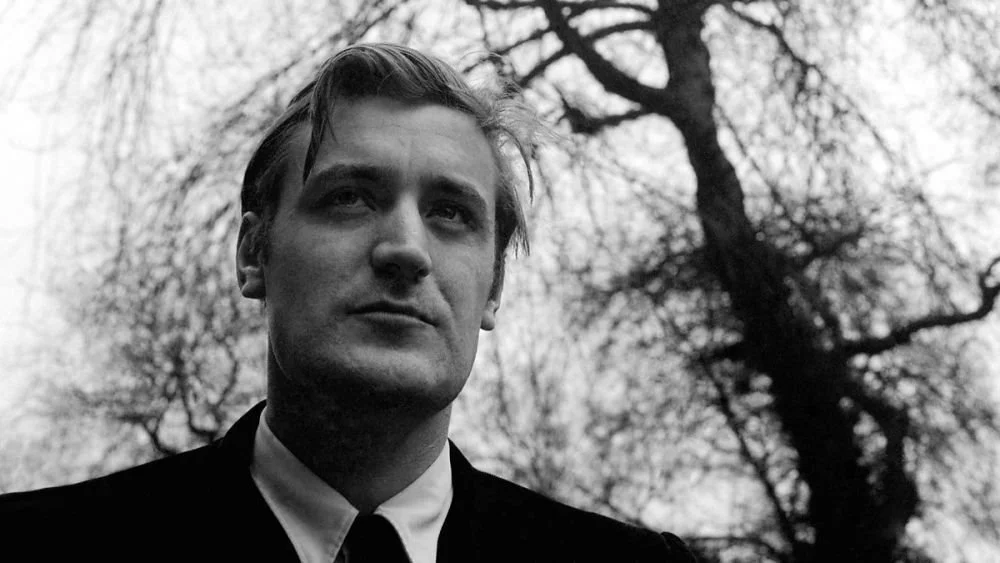
October is a good time to pause and reflect on the life and work of Ted Hughes (1930-1998), one of Britain’s most powerful poets, whose voice remains alive in both dark myth and sharp nature, in children’s imagination as much as adult heartbreak. Much is written about his major poetry—The Hawk in the Rain, Crow, Birthday Letters—but there are corners of his work less often visited; here are some that deserve more attention on what would have today, been his 96th birthday.
Beyond the poems: novels and children’s works
Hughes is perhaps best known for his poetry, but he also wrote novels and stories that show his imaginative breadth, especially toward young readers.
The Iron Man (1968), is his most famous work for children. It’s part sci-fi, part fairy tale, part myth. A giant metal being arrives, causes havoc, then befriends a boy and eventually helps defend the earth from a cosmic threat.
The Iron Woman (1993) is its sequel. While less often in the spotlight, it carries Hughes’s environmental concerns to the fore: pollution, ecological breakdown, and the moral responsibility of humanity.
Then there are shorter works for children which are charming, inventive, lyrical. Examples include Meet My Folks! (1961), How the Whale Became (1963), The Earth-Owl and Other Moon-People (1963), Nessie the Mannerless Monster (1964).
These works show that Hughes was not only drawn to the wild, sometimes brutal edges of experience, but also deeply committed to the wonder of myth, the voice of animals, and the imagination of children.
His dramatic & radio work: myths, plays, the unusual & experimental
Ted Hughes also experimented with drama and radio plays. These pieces are less often anthologised than his poetry, yet they add texture to how we see him as a writer engaging with myth, sound, voice, performative space.
Some key dramatic/radio works include:
Radio plays such as The House of Aries (1960), A Houseful of Women (1961), The Wound (1962), Difficulties of a Bridegroom (1963), Dogs (1964).
Orghast (1971), an experimental verse drama, staged in Persepolis, Iran, with Peter Brook. It’s highly unconventional in format and rare in staging, one of his more ambitious dramatic collaborations.
Seneca’s Oedipus adaptation (1968) shows Hughes engaging directly with classical drama.
Additionally, Hughes published Collected Plays for Children (2001) which includes six plays aimed at young performers: The Coming of the Kings; The Tiger’s Bones; Beauty and the Beast; Sean, the Fool, the Devil and the Cats; Orpheus; The Pig Organ. Some of these, like Orpheus and The Pig Organ, are much less seen, even though they carry Hughes’s lyrical power and storytelling deeply.
Themes in those hidden works
What threads run through Hughes’s lesser-known works?
Myth, Folklore, and the Animal World
Many of these stories draw on mythic structures or folklore (for example in How the Whale Became, or The Earth-Owl and Other Moon-People). Animals are often more than symbols; they act, suffer, are witnesses, are agents.Environment and Nature
Hughes’s concern for nature isn’t just poetic decoration—it becomes plot in works like The Iron Woman. He depicts polluted swamps, suffering animals, consequences of human neglect.Experimenting with Form and Voice
The radio plays, experimental dramas like Orghast, works using children’s voices—all show Hughes pushing boundaries: not content merely to write poems, but to let myth, sound, spectacle, and story cohabit.Moral Imagination and Responsibility
Even in his more playful children’s stories, there’s a strong sense of moral questioning: what is right, what is cruel, what is owed to others—animals, nature, other humans.
Why these works matter, especially now
On his birthday in October 2026, remembering Hughes through these works is more than a literary exercise. They remind us:
That writers can address big questions—ecology, animal rights, ethics—without sacrificing wonder.
That younger readers deserve stories that are imaginative, challenging, sometimes unsettling, not purely comfort.
That myth and experiment still have power: to surprise us, to shift perspective, to reconnect us with the larger natural world.
As climate crisis, environmental damage, and loss of wildlife grow more urgent, works like The Iron Woman or How the Whale Became gain fresh relevance. Hughes’s voice in these stories warns, consoles, provokes, and invites care.
Reflections & legacy
Ted Hughes was complicated—as people are. His life had its controversies, its pain, its tragedies. But one of his richest legacies is that he left us a wide range of literature: the brutal, the lyrical, the playful, the mythic. His lesser-known dramas and children's works are vital parts of that legacy. They show another side of him: the teacher, the storyteller, the one who listened for the wild voices in us, the animal and elemental voices.
So, this October, when remembering Hughes, let’s not only re-read Crow or Birthday Letters, but also open The Iron Woman, stage one of his children’s plays, listen to his radio plays, share How the Whale Became with young readers. In doing so we honour not just a great poet, but a full creative life—one that held both shadow and light, both adult pain and childlike wonder.
