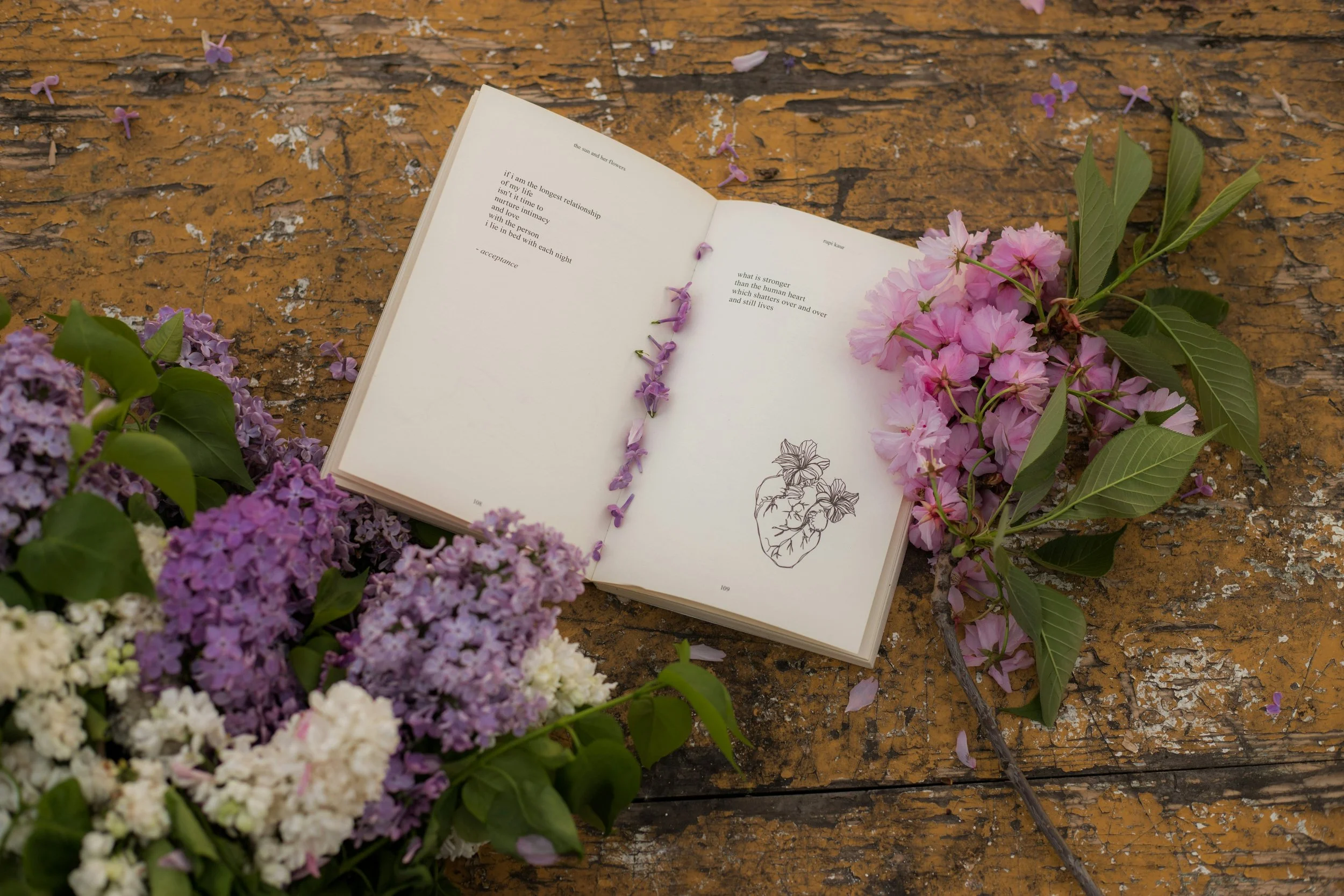
Jovan Vasilevic, Unsplash.
When young people first encounter poetry, nature is often the gateway. Birds in flight, rivers in motion, trees in bloom—these images stir both imagination and reflection. Yet, too often, students are introduced only to a narrow group of poets. To truly inspire the next generation, it’s vital to share voices from across cultures, backgrounds, and traditions, showing that the natural world belongs to everyone.
Here are some diverse nature poets whose works can open doors for secondary school students, encouraging them to see the environment—and themselves—in new ways.
Mary Oliver (United States)
Few modern poets speak as clearly and tenderly about nature as Mary Oliver. Her work, rooted in the landscapes of New England, is accessible to students while also carrying deep philosophical weight. Poems like Wild Geese and The Summer Day invite readers to pause, observe, and ask big questions about belonging and purpose.
Why she inspires students: Oliver reminds teenagers that poetry doesn’t have to be complicated to be profound. Her writing models how close attention to everyday creatures—geese, grasshoppers, owls—can connect to universal truths about being alive.
Joy Harjo (Muscogee Nation, United States)
As the first Native American U.S. Poet Laureate, Joy Harjo combines a deep reverence for the earth with themes of history, memory, and resilience. Her poems often weave music, ritual, and the voices of ancestors into depictions of landscapes and animals.
Why she inspires students: Harjo’s work expands the idea of ‘nature poetry’ to include cultural memory and spiritual connection. Students learn that the land is not just scenery but part of identity, community, and continuity.
Li Bai (China, Tang Dynasty)
Though he wrote more than a thousand years ago, Li Bai (also known as Li Po) remains one of the world’s most beloved poets. His short, lyrical poems celebrate rivers, mountains, moonlight, and the joy of wandering through wild places.
Why he inspires students: Li Bai offers teenagers a sense of timelessness. His poems show that even centuries ago, people turned to nature for comfort, freedom, and inspiration. Students may find it exciting to see how a simple image—like the moon’s reflection in water—connects them across cultures and centuries.
Grace Nichols (Guyana/United Kingdom)
Grace Nichols brings the sounds, colours, and rhythms of the Caribbean into her poetry. Her collection The Fat Black Woman’s Poems and children’s verse alike often include vivid images of tropical landscapes, seas, and skies. Nichols also highlights the intersections of culture, migration, and natural imagery.
Why she inspires students: Nichols proves that nature poetry isn’t only about English daffodils or American prairies. For students from multicultural backgrounds, her voice affirms that their own landscapes and heritage belong in literature, too.
Bashō (Japan, 17th Century)
Matsuo Bashō, master of the haiku, distilled nature into three short lines. His poems focus on precise observation: a frog leaping into water, autumn winds, or the stillness of a snowy morning.
Why he inspires students: Haiku appeals to teenagers because of its brevity and clarity. Bashō teaches that paying attention to a single detail in nature can open up infinite meaning. Writing haiku can also be a fun classroom exercise that sharpens observation skills.
Camille T. Dungy (United States)
Camille T. Dungy is a contemporary African American poet whose work often brings together ecology, history, and social justice. In collections like Trophic Cascade, she explores landscapes and the human relationship with them, refusing to separate environmental awareness from cultural context.
Why she inspires students: Dungy offers a model of how poetry can respond to urgent issues like climate change and racial inequality while still celebrating the beauty of the natural world. For teenagers who want relevance, her work shows poetry as activism and art combined.
Rabindranath Tagore (India, Nobel Prize 1913)
Tagore’s poems blend spirituality, nature, and human longing. Drawing on Indian landscapes, monsoon rains, and the rhythms of rural life, he uses natural imagery to explore love, faith, and freedom.
Why he inspires students: Tagore connects nature with universal feelings—joy, sorrow, wonder. His work encourages students to see the natural world as part of emotional and spiritual life, not just physical scenery.
Why diversity matters in nature poetry
When secondary school students encounter diverse poets, several things happen:
They see that nature poetry isn’t limited to one tradition or country.
They connect environmental issues to cultural and historical contexts.
They recognise that their own voices and backgrounds also belong in the conversation about the natural world.
Sharing poetry by writers from across the globe demonstrates that our relationship with nature is both personal and collective, ancient and urgent.
Closing thoughts
Nature is the one classroom we all share. By bringing in diverse poets, we give students the gift of seeing it through many eyes—ancient and modern, Caribbean and Chinese, Native American and Japanese. Each poet adds a thread to the tapestry of human connection with the earth.
In a time of ecological crisis, this diversity matters more than ever. Secondary school students deserve to know that caring for the planet is not just a scientific duty, but a deeply human story told in many voices.
